Historic Palm Cottage: 5 Artifacts That Tell the Story of Old Naples, Florida
Not far from The Capri Inn, Naples Historical Society preserves more than just Historic Palm Cottage, Naples’s oldest house. Its collection contains wonderfully tangible clues to the people who fished, drank, danced, painted, and vacationed here long before Naples became the polished Gulf Coast destination it is known as today.
Naples has the unusual distinction of being a city that was more or less conceived as a vacation destination.
Unlike communities that grew around a military fort, trading post, port, or crossroads, the Naples that began taking shape in the late nineteenth century was drawing outsiders south for recreation – particularly hunting, fishing, and the warm Gulf Coast winters. “We didn’t begin like that,” says John Telischak, director of museums and collections at Naples Historical Society, when speaking of the more conventional origins of American towns. Naples, by contrast, emerged as “a place of leisure.”
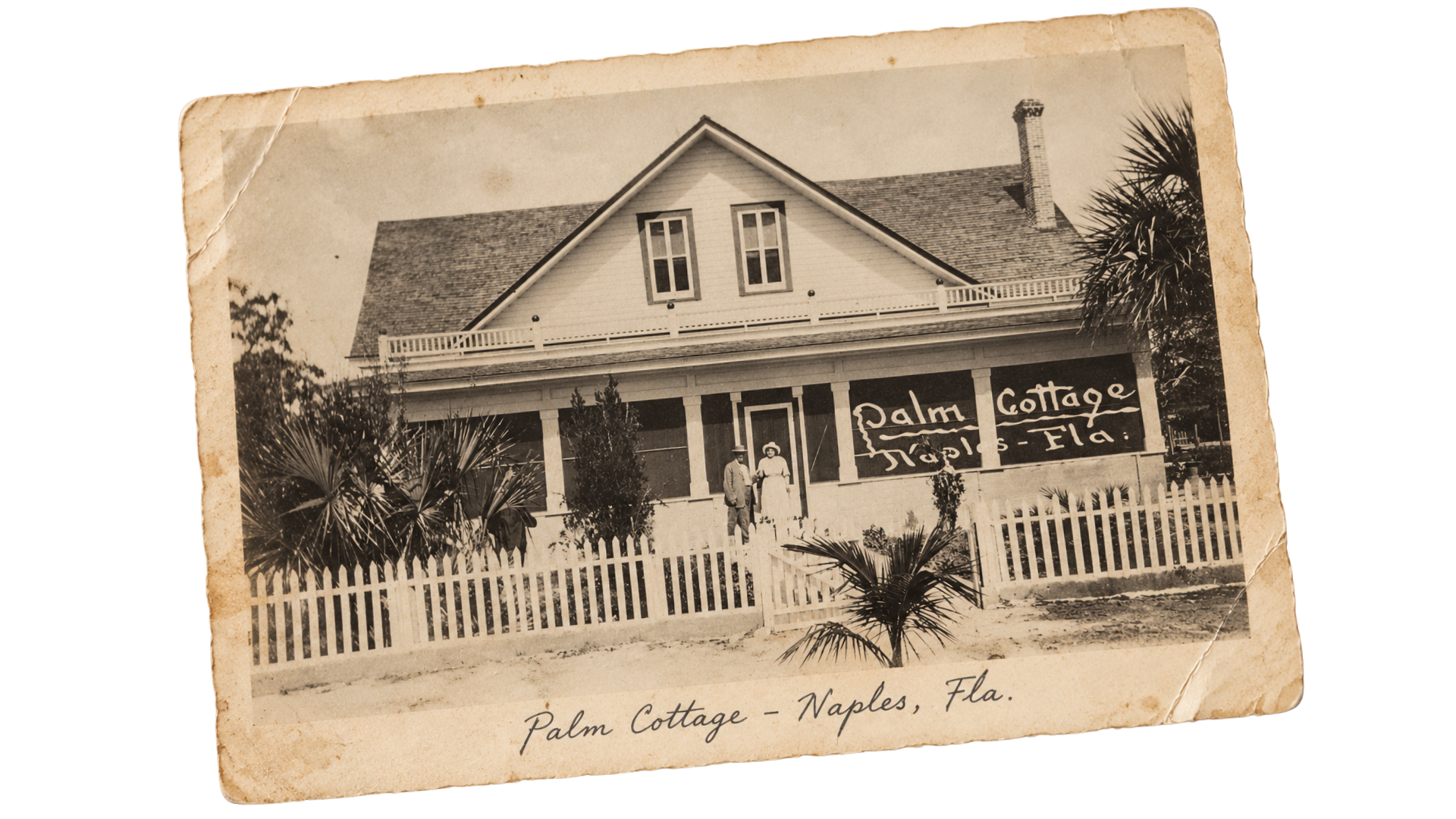
That makes Historic Palm Cottage – which is actually home to the Naples Historical Society – a particularly revealing place to understand the city.
For guests of The Capri Inn, Palm Cottage offers another reason to set out on foot and explore the historic heart of Naples. The inn puts you within easy reach of the cottage as well as the galleries, restaurants, boutiques, and landmarks that give Old Naples much of its character.
And Palm Cottage reveals a side of the neighborhood you won’t necessarily notice while strolling its streets: the anglers, artists, vacationers, and colorful personalities who shaped the Naples that surrounds you today.
Telischak, who has been a familiar face with the historical society for a decade and oversees everything from artifact cataloging to docent training and history programming, helped us narrow the collection down to five objects worth seeking out. Some are important. Some are peculiar. The best are both.
5 HISTORIC PALM COTTAGE ARTIFACTS TO LOOK FOR
1. The Original Naples Hotel’s Service Bell
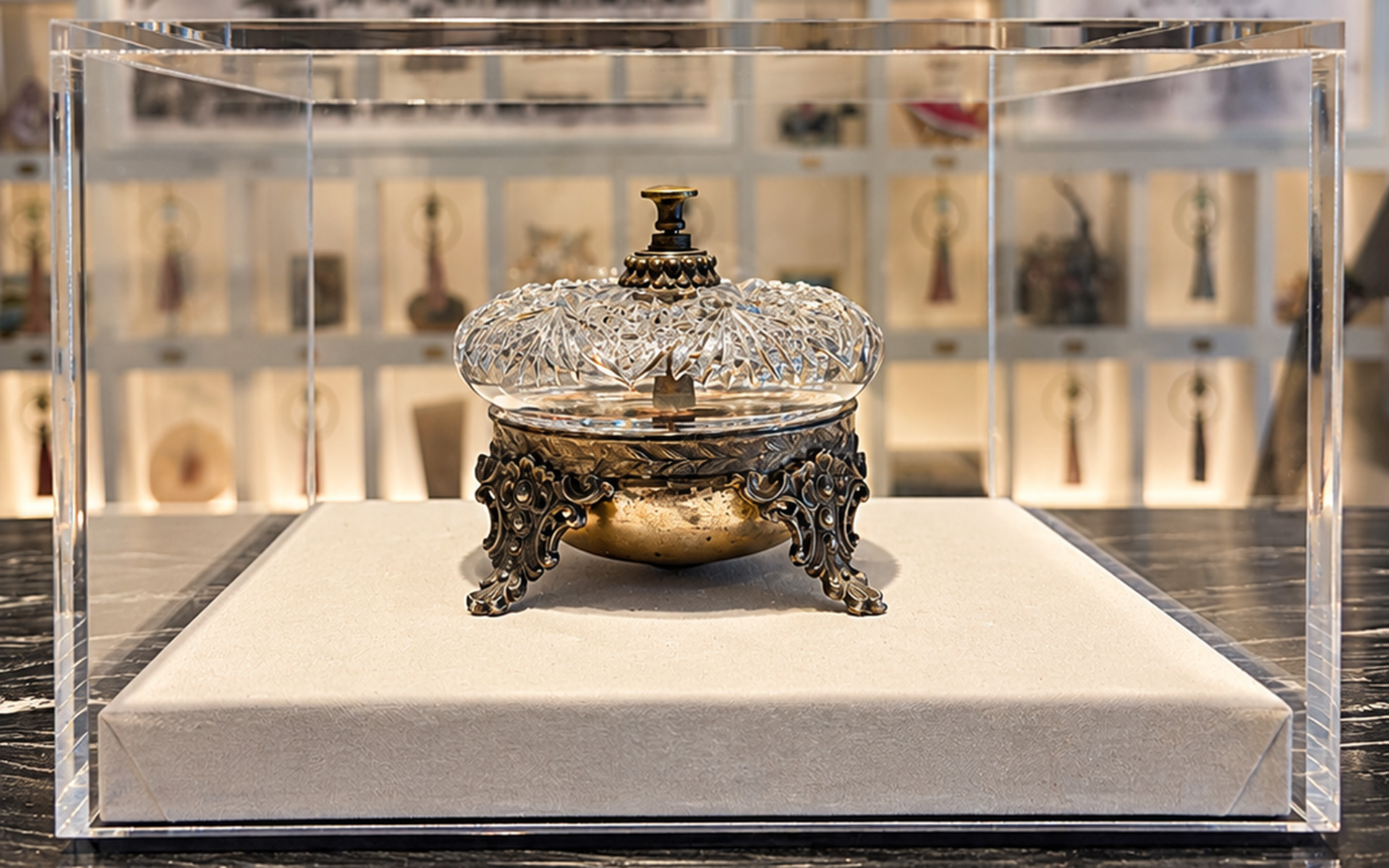
It isn’t a massive object or an especially imposing one. In fact, that is partly what makes this small service bell from the original Naples Hotel so evocative.
Telischak describes it as a rather fancy affair made with German pewter and cut crystal, operated by twisting rather than simply tapping it. It dates to the hotel culture that established Naples as a winter destination.
The original Naples Hotel opened in 1889, when reaching this isolated stretch of Southwest Florida was itself part of the adventure. Early guests came principally to hunt and fish, and the hotel functioned less like the sprawling beach resorts that would follow than a remote sporting lodge. By the 1910s, Telischak says, Naples tourism was beginning to shift toward something more recognizable today: visitors coming specifically for the beach, bathing, and leisure by the Gulf.
The bell is an unusually intimate survivor of that transition. Rather than simply looking at a photograph of Naples’ first tourists, you are looking at an object they would have actually used.
Telischak even offers a tantalizing way to imagine it: Rose Cleveland – sister of President Grover Cleveland and, according to local history, among Naples’ earliest prominent visitors – rang this bell while staying at the hotel (she was also the first person to sign the hotel register in 1889).
That human scale is precisely what Telischak finds most compelling about museum collections. “Names and dates are boring,” he says. The revealing questions are what people ate, wore, and did for fun. “By viewing history through this lens, that’s when you realize you’re not much different from people in the past.”
2. Dr. Earl Baum’s Prohibition-Era Prescription Book
One of the collection’s best stories apparently spent years looking rather inconspicuous on a bookshelf.
While reorganizing Palm Cottage’s artifacts a few years ago, Telischak and colleagues discovered a thick prescription ledger belonging to a local doctor practicing during Prohibition. At the time, physicians could legally prescribe certain alcoholic beverages for medicinal purposes – creating one of the era’s more convenient workarounds to the national ban on alcohol.
And this doctor, Telischak remembers, appears to have kept his pen busy. “I kid you not,” he says of the hefty ledger, “he wrote a lot of prescriptions for booze.”
It is an amusing artifact, but it opens a window onto a more colorful chapter of Naples history. Telischak points to stories of illicit stills in the Everglades and boats heading offshore to acquire imported rum during Prohibition. The Gulf itself made Southwest Florida an intriguing setting for the cat-and-mouse game between enforcement and people determined to find a drink.
That is what makes the prescription book more than a novelty. It reduces a sweeping national event called Prohibition to something remarkably local and ordinary: a Naples doctor, his patients, and page after page of handwritten prescriptions.
3. William Henry’s View Toward the Naples Pier
Palm Cottage isn’t only filled with utilitarian relics. Its art collection preserves landscapes that amount to visual records of a Naples that has largely disappeared.
Among Telischak’s favorites are works by William Henry, an artist active locally in the 1940s. The historical society has three of his paintings, including an oil that hangs above the fireplace and depicts an idyllic beach day, looking out toward the Gulf.
Telischak points out the details: the Naples Pier reaching into the water, a sailboat offshore, sea grape, coconut palm, and palmetto framing the view.
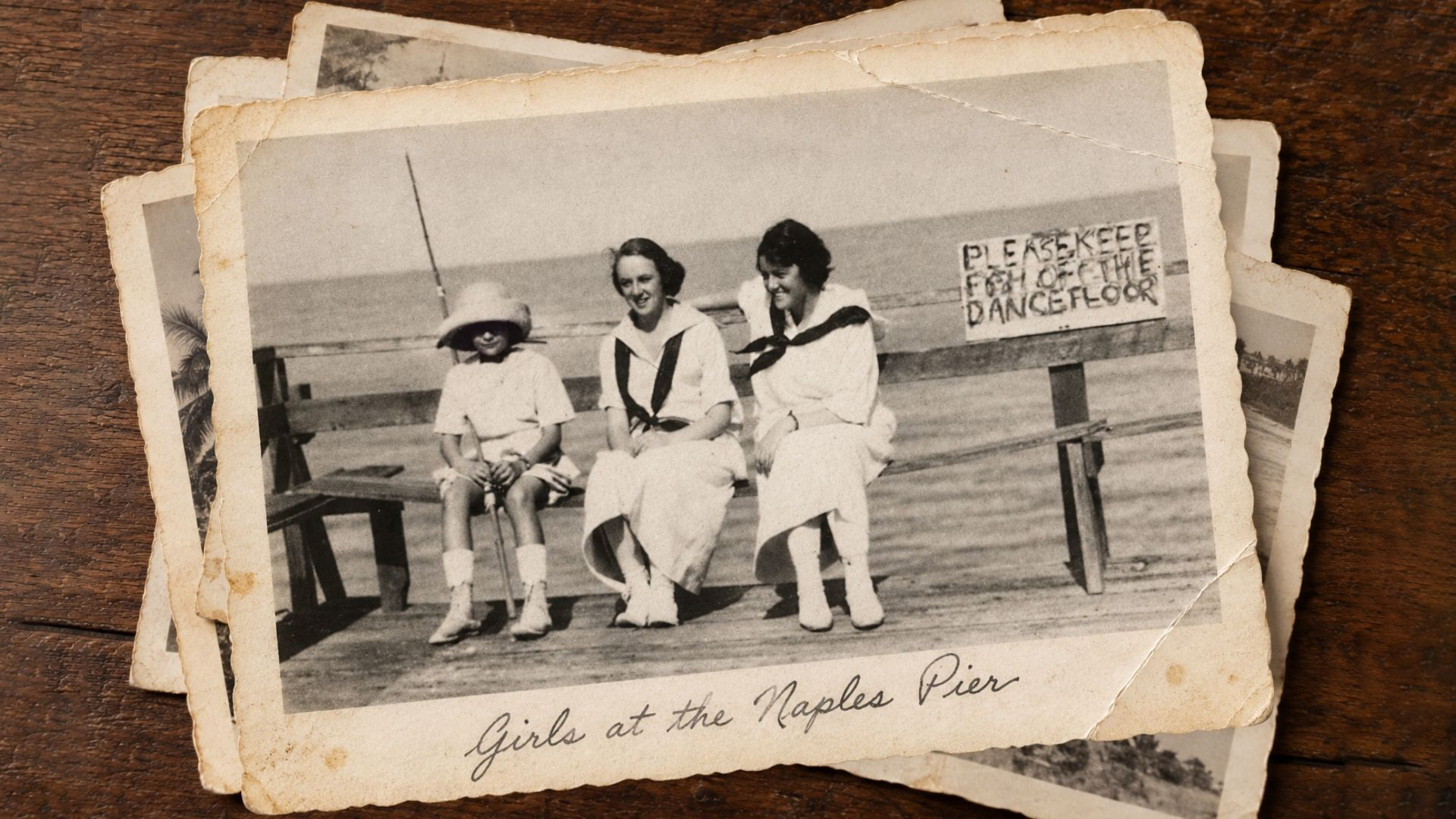
The scene matters because the pier has been one of Naples’ defining communal spaces almost from the beginning. In the city’s earliest tourism era, it was infrastructure as much as attraction: visitors arriving in a place with few reliable overland connections depended heavily on boats. Later, it evolved into a social gathering place where hotel guests walked after dinner, fished, watched sunsets, and – by the 1920s – danced to live music or portable Victrolas.
Historic photographs in the collection capture that changing social world, including a wonderfully specific sign asking fishermen not to throw fish onto the dance floor. The society created a replica from a photograph and displays it in Palm Cottage.
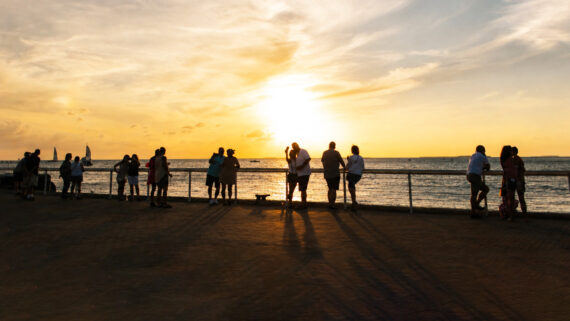
A century later, Naples still gathers around the gulf at sunset. Henry’s painting lets you see how old that ritual really is.
4. A Table Built for Hiding Liquor
If the prescription book represents the legal loophole, another piece in the collection represents a more covert solution.
Telischak describes an antique round wooden table associated with Walter Haldeman’s family that predates Palm Cottage itself. During Prohibition, its pedestal offered a useful secret: it was hollow, creating a concealed space where liquor could be stashed out of sight.
“At the time, people had all kinds of ways of hiding alcohol,” Telischak explains, pointing to everything from disguised compartments in shoes to hollowed spaces in ordinary household objects. The table turned a perfectly respectable piece of furniture into a hiding place sitting more or less in plain view.
It is also a reminder that Haldeman wasn’t simply a name attached to an old building. The Kentucky newspaper publisher was one of the figures instrumental in Naples’ early development (in fact, he built Palm Cottage as part of the original Naples Hotel in 1895).
Objects like this are where the abstraction of “historic Naples” starts becoming much more entertaining: Suddenly, the city’s founders aren’t names on plaques. They owned furniture with secrets.
5. A Working Regina Music Box with 20 Metal Discs
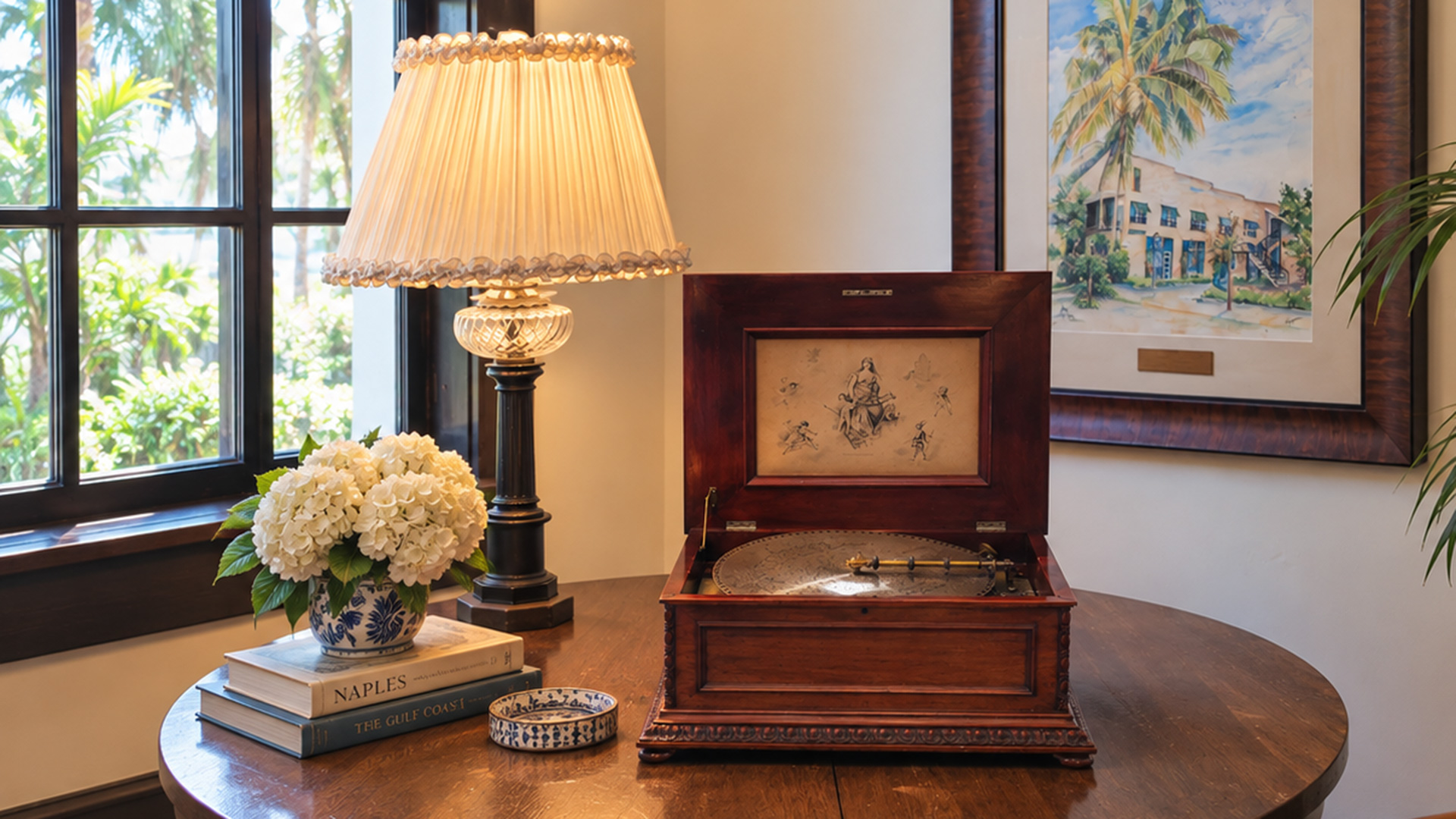
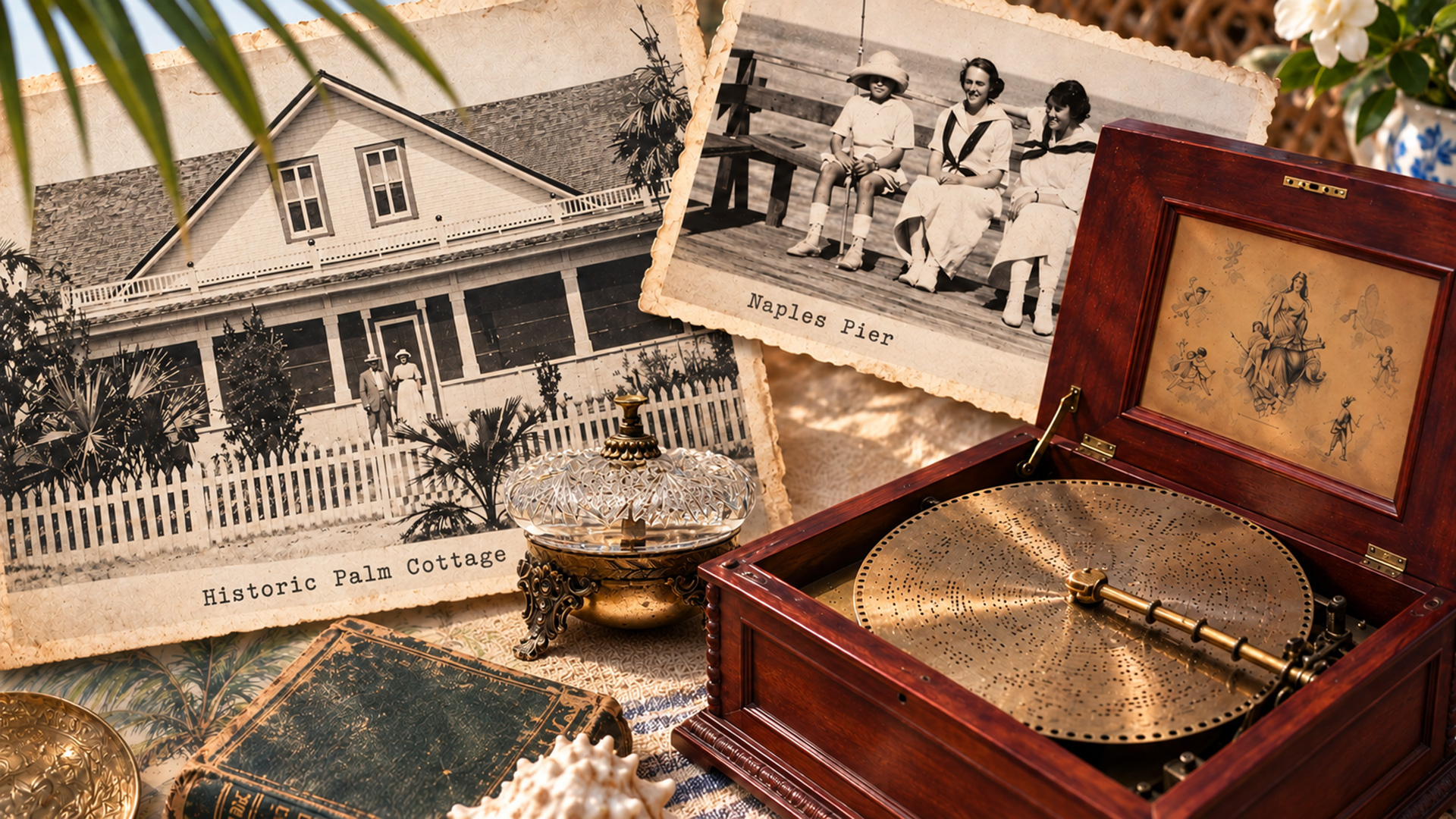
Perhaps the easiest way to collapse a century of distance is to hear it. Sitting in Palm Cottage’s living room is a Regina music box dating to around the turn of the twentieth century. Rather than the small cylinder mechanism many people associate with antique music boxes, this one plays large perforated metal discs – and the society has roughly 20 of them.
More remarkably, Telischak says, it still works.
The music box had remained in one family for more than a century, tracing back to a great-grandmother in St. Louis before eventually entering Palm Cottage’s collection. That provenance gives it a different kind of historical weight from an object tied to a famous founder or hotel. It represents the domestic technology that entertained ordinary people before recorded music became instantly available at the touch of a screen.
And in Palm Cottage, it doesn’t feel stranded behind the glass of a conventional museum display. It sits in a living room, close to the kind of domestic setting in which such an object would originally have been enjoyed.
HISTORIC PALM COTTAGE IS ONLY HALF THE STORY
Historic Palm Cottage may be the headliner in this article, but visitors shouldn’t leave without exploring the neighboring Smith Exhibit Hall.
Here, Naples’s history becomes considerably more interactive. Exhibits draw on the historical society’s archival photographs, oral histories, hotel records, and maps to explain how the city developed. A digital hotel registry lets visitors explore entries and fishing stories left by early guests. Telischak recalls one scanned registry page where competing fishing claims prompted someone to scribble the equivalent of “LIAR?” beside another guest’s entry – exactly the sort of tiny historical detail that makes the people behind the dates feel familiar.
Elsewhere, a diorama helps orient visitors to the vanished geography of early Naples, including the route of an ancient canal. Oral histories preserve the voices and recollections of descendants of founding families. And a “magic mirror” lets visitors virtually try on period clothing based on garments seen in the society’s archival photographs.
Those photographs can be surprisingly revealing in and of themselves. Telischak points to images of early Naples visitors who, to modern eyes, appear almost comically formal for Florida: straw boaters, linen jackets, light-colored suits. Look closer, however, and he sees people doing exactly what modern visitors do – adapting their wardrobes to the climate and loosening the social rules a bit while on vacation.
The clothes changed. The impulse didn’t.
HOW TO VISIT HISTORIC PALM COTTAGE FROM THE CAPRI INN
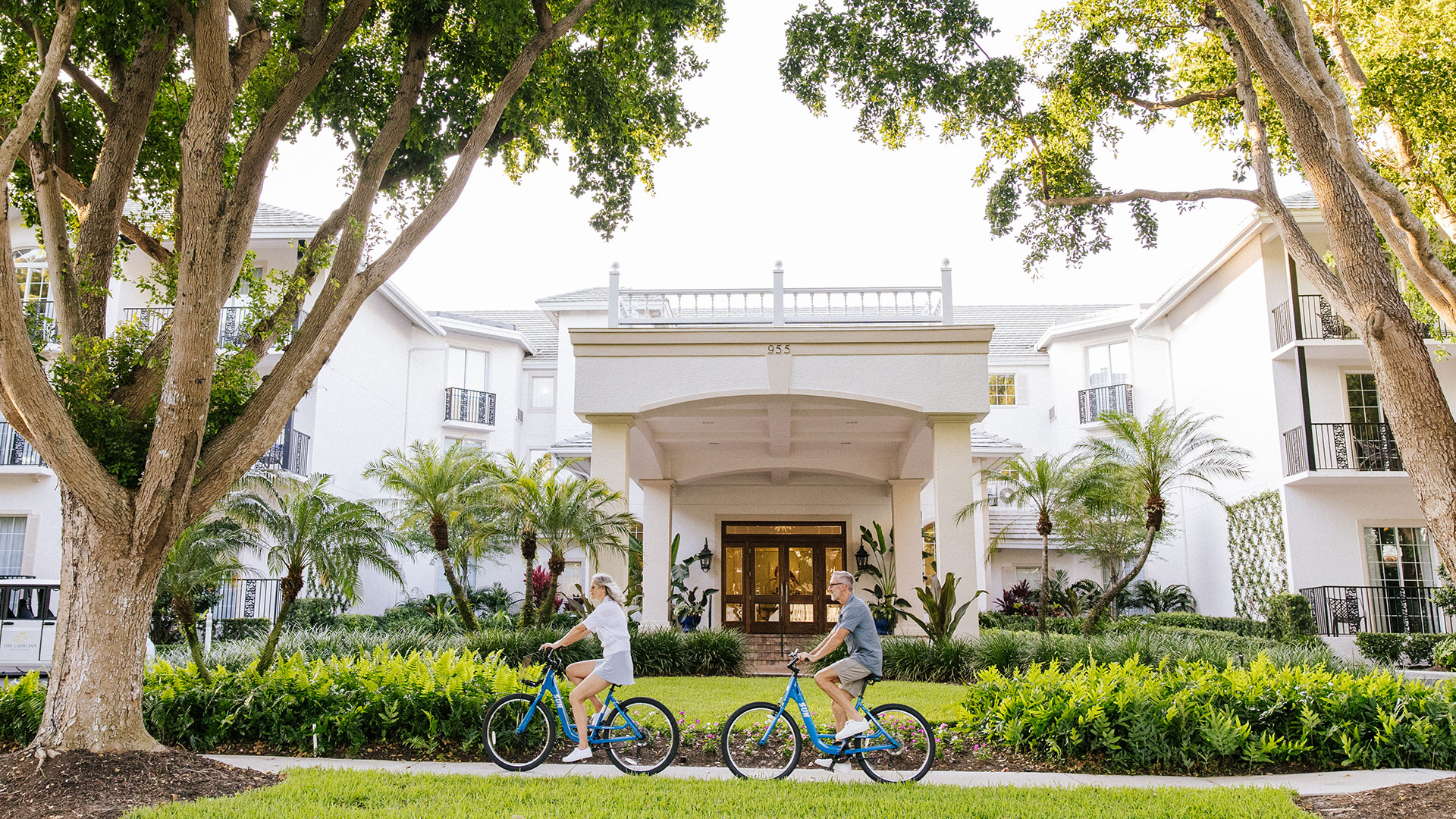
Historic Palm Cottage sits at 137 12th Avenue South, within easy walking distance of Olde Naples Hotel at 200 Broad Avenue South. Open seasonally (November through July), The Naples Historical Society offers docent-led tours when guides are available, with self-guided materials provided otherwise; admission also includes the Norris Gardens (an expansive Victorian-style garden right next door) and Smith Exhibit Hall.
For guests of The Capri Inn, a visit fits naturally into a day spent exploring Old Naples. Make Palm Cottage the history stop, then continue through the neighborhood for its galleries and boutiques, lunch or dinner along Fifth Avenue South or Third Street South, and, of course, time by the Gulf.
It’s also a fitting excursion from a hotel that puts the pleasures of downtown Naples at the center of the stay. Palm Cottage simply adds another layer to what you encounter outside its doors: the stories behind the destination.
Its bell, paintings, music box, furniture, photographs, and wonderfully incriminating prescription ledger show that Old Naples wasn’t simply a prettier, sleepier predecessor to the modern city. It was full of anglers bragging about their catches, vacationers dancing on a working pier, residents devising ways around Prohibition, and visitors figuring out how to dress for the Florida heat.
Which gets back to Telischak’s point: History becomes much more interesting once you stop treating it as a procession of names and dates and start looking for the people.
Luckily, at Palm Cottage, you’ll see they left plenty behind.