100 Years of Jupiter, 5 Stories Worth Telling
With Jupiter celebrating its centennial in February 2027, we’re digging into the town’s colorful past by uncovering five fascinating stories – from a lighthouse that went dark during the Civil War to a railroad with stops named after planets – and where to discover their traces today.
A train that traveled to Mars and Venus. A secret naval station that tracked German submarines. A pioneer home that was literally floated down a river. No, these aren’t plotlines from a historical adventure novel. They’re all part of the surprisingly colorful history of Jupiter, Florida.
And this February, there’s an especially good reason to revisit the past. On February 6, 2027, the town will host its annual Jupiter Jubilee, a free, family-friendly celebration of the coastal community that marked 100 years since its incorporation in 2025.
But Jupiter’s story stretches back much further than a century. Long before it became synonymous with beautiful beaches, waterfront dining, and laid-back resort living, this stretch of Florida’s Atlantic Coast had already seen its fair share of adventure. In honor of the upcoming festivities, we’re uncovering five fascinating chapters of Jupiter’s past – and where you can still find their traces today.
1. THE LIGHTHOUSE THAT WENT DARK DURING THE CIVIL WAR
1860 | Jupiter Inlet Lighthouse
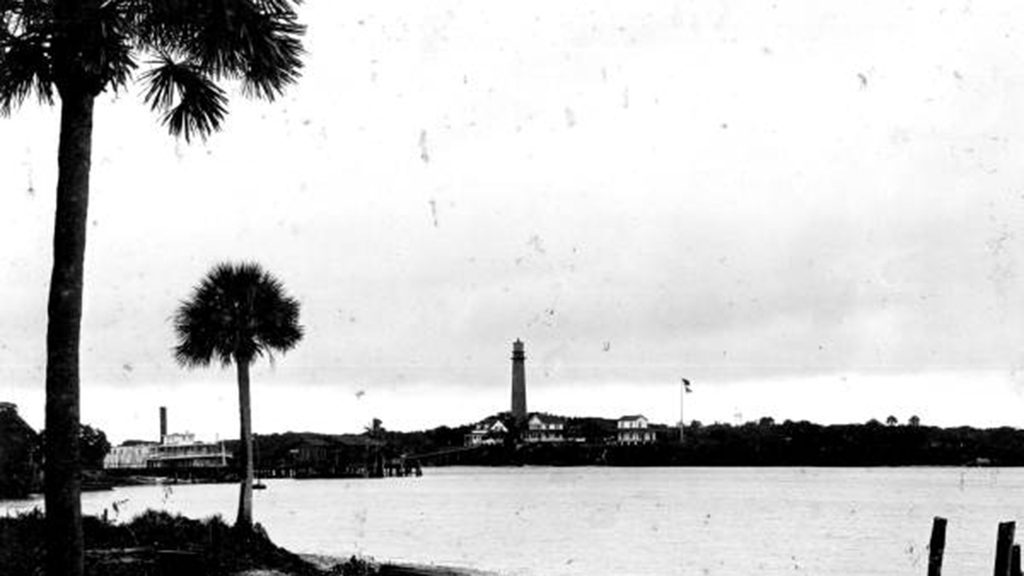
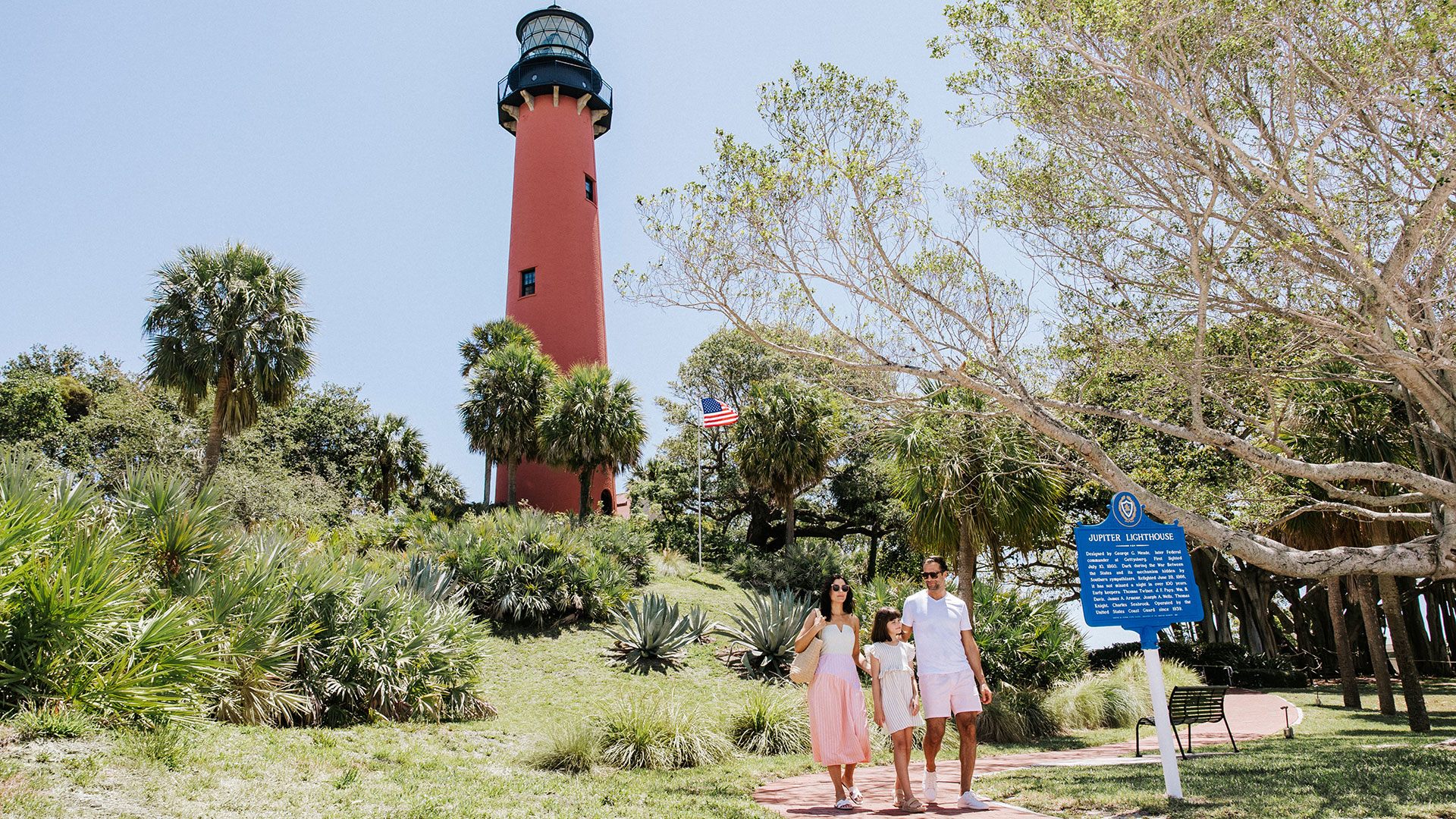
Jupiter’s most recognizable landmark has been watching over the inlet since 1860 – a full 65 years before the town was incorporated. But did you know that its famous beacon once went dark for nearly five years? Or that its designer went on to become one of the Civil War’s most celebrated Union generals?
The story begins with Army Lieutenant George Gordon Meade, who designed the lighthouse years before making history as the general who defeated Robert E. Lee at Gettysburg. When the tower’s powerful Fresnel lens first illuminated the coastline on July 10, 1860, it helped ships navigate the treacherous reefs and shoals surrounding Jupiter Inlet.
That guiding light didn’t last long. When the Civil War erupted the following year, Confederate sympathizers disabled the lighthouse’s lighting mechanism, plunging the tower into darkness until 1866.
Fortunately, the lighthouse’s story didn’t end there. It survived hurricanes, decades of coastal development, and more than a century and a half of changing maritime technology. Even more remarkable? Its original first-order Fresnel lens remains in use today.
See It Today: Climb the 105 steps of the Jupiter Inlet Lighthouse & Museum for sweeping views of the Atlantic, the Loxahatchee River, and Jupiter Inlet. And take a closer look at that unmistakable red exterior. The tower was originally exposed brick; its protective red cement coating wasn’t added until 1910.
2. THE RAILROAD THAT TOOK PASSENGERS TO MARS AND VENUS
1889–1895 | The Celestial Railroad
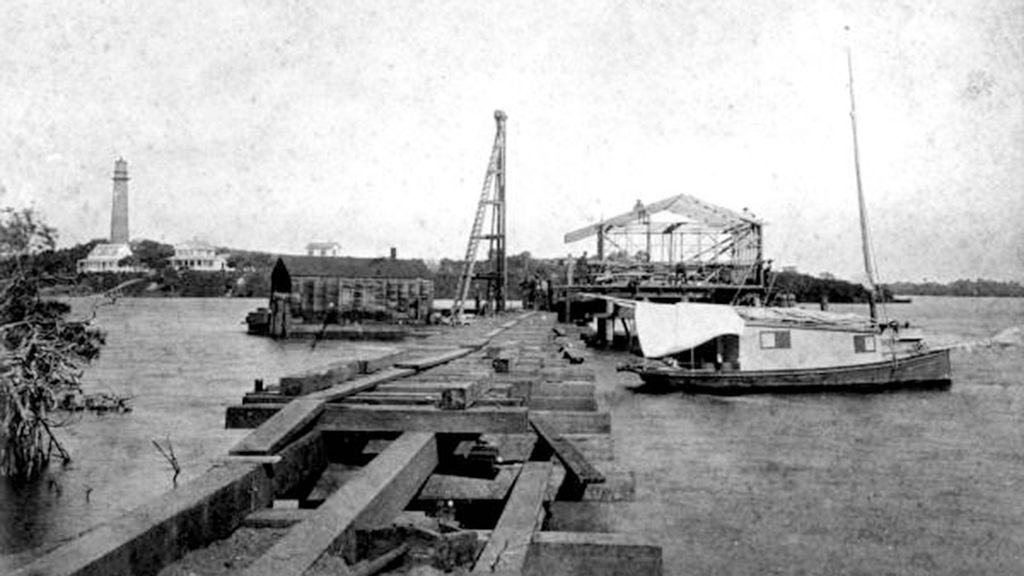
Forget space travel. In late-nineteenth-century Jupiter, getting to Mars or Venus was as easy as hopping aboard a train. The aptly nicknamed Celestial Railroad – officially the Jupiter and Lake Worth Railway – began operating on July 4, 1889. Its seven-and-a-half-mile route connected Jupiter to Juno, with stops at Mars and Venus along the way. The latter two weren’t exactly bustling passenger stations, though. They were primarily freight stops where pineapples, coconuts, and citrus were loaded for transport.
And the planetary names weren’t the only peculiar thing about this little locomotive.
Because the railroad had no turntable to reverse the engine, the train traveled forward from Jupiter to Juno, then made the entire return trip backward. A one-way ticket cost 75 cents, and the journey took approximately 30 minutes. According to local historical accounts, engineer Blus Rice even used the locomotive’s steam whistle to play a tune announcing the train’s approach.
Alas, the Celestial Railroad’s star burned out rather quickly. As Henry Flagler’s Florida East Coast Railway expanded into the region, the little line couldn’t compete. By April 1895, it had made its final run. In one of history’s more amusing twists, the Celestial Railroad had helped transport building materials for Flagler’s grand Royal Poinciana Hotel in Palm Beach just two years earlier.
See It Today: The tracks may be gone, but a historical marker at 18085 North Highway A1A commemorates the former railway. You can also explore Jupiter’s historic Inlet Village, once a busy waterfront hub where steamboat passengers and freight connected with the railroad.
3. THE PIONEER HOME WITH AN ANCIENT SECRET BENEATH IT
Ancient History–1898 | DuBois Pioneer Home
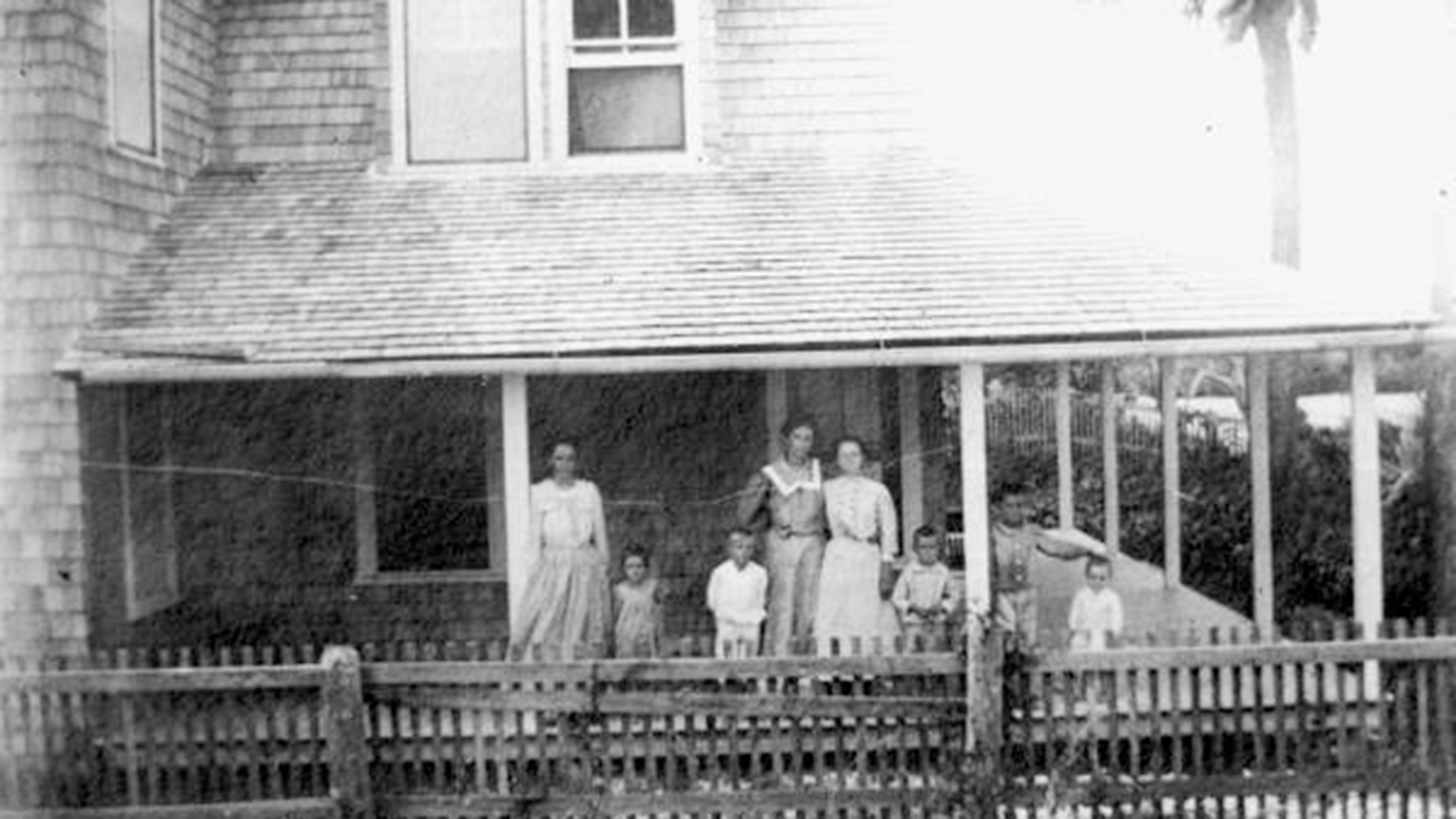
Perched on a grassy hill overlooking Jupiter Inlet, the DuBois Pioneer Home looks like a charming relic of Old Florida. But the most fascinating part of this historic homestead might just be what’s underneath it.
Built in 1898 by pioneer Harry DuBois, the wooden home sits atop an ancient shell mound created by the Jeaga people, who inhabited the Jupiter Inlet region long before European settlers arrived. Formed over generations through the accumulation of shells and other materials, the mound was once more than 600 feet long and 20 feet high. Archaeological discoveries in the surrounding area point to human activity dating back thousands of years.
And while the ground beneath the house tells one extraordinary story, the house itself has a rather unusual one, too.
Before building his family home, DuBois lived in a smaller structure known as the Pineapple House, which he transported along the river from his former pineapple-growing property. And by transported, we mean floated. Apparently, moving an entire building by water was a perfectly practical solution in the days before convenient roads.
Today, the pioneer home and its archaeological site share a place on the National Register of Historic Places, preserving two very different eras of Jupiter’s past in one remarkable setting.
See It Today: Head to DuBois Park, where you can admire the historic home overlooking the inlet, enjoy a waterfront picnic, or take a dip in the park’s popular swimming lagoon. Check with Palm Beach County Parks for historic-home tour availability before your visit. And remember: That picturesque hill is much more than a scenic overlook.
4. THE SECRET WWII STATION THAT TRACKED GERMAN SUBMARINES
1940s | Secret Station J

Today, Jupiter’s Atlantic shoreline is better known for sunbathers and surfers than military operations. But during World War II, the waters just offshore were the scene of a deadly battle against German submarines – and a secret naval installation near the lighthouse helped fight back.
In February 1942 alone, German U-boats sank two ships near Jupiter Inlet, killing at least 40 people. With merchant vessels carrying essential supplies along Florida’s coast, the U.S. Navy needed a way to track enemy submarines before they struck again.
Enter Secret Station J. Hidden within the Jupiter Lighthouse Reservation, the classified installation used advanced radio direction-finding technology nicknamed “Huff-Duff” to intercept transmissions from German U-boats. When submarines surfaced to recharge their batteries and communicate with Germany, Navy operators listened for their signals, helping American forces determine their whereabouts. By 1943, the station was home to 95 Navy personnel and 11 Marines, with barracks, radio buildings, workshops, and even recreational facilities. Quite an operation for a small coastal community.
After the war, the station was decommissioned, and most of its buildings eventually disappeared. But one survives – and it has a surprisingly domestic backstory.
See It Today: The Jupiter Inlet Lighthouse & Museum occupies the last remaining building from Station J. Originally constructed to house married Navy personnel and their families, the building once contained six two-bedroom apartments, complete with brick fireplaces and a screened porch overlooking the inlet. Not exactly what you’d picture when imagining a top-secret wartime intelligence station.
5. THE LITTLE FISHING VILLAGE THAT BECAME JUPITER
1925 | The Birth of a Town
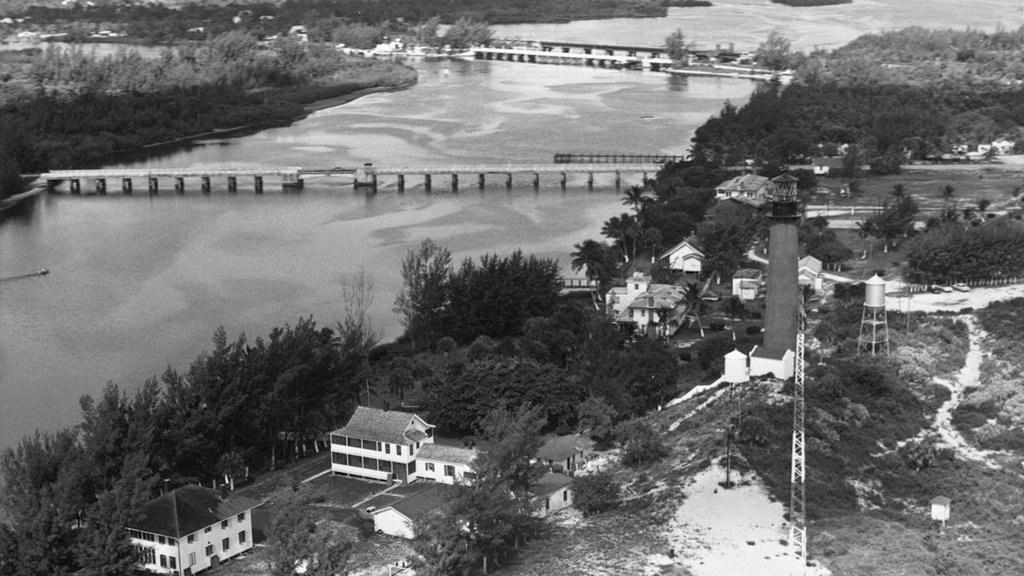
For a place with such a colorful past, Jupiter was actually a bit of a late bloomer when it came to becoming an official town.
By the early 1920s, its lighthouse had been guiding ships for decades, steamboats had carried passengers along its waterways, and a small fishing village had taken shape near the inlet. Yet Jupiter wouldn’t officially incorporate until February 9, 1925.
The timing was no coincidence. Florida’s booming real estate market had developers dreaming big, with plans for landscaped boulevards, hotels, yacht facilities, and residential neighborhoods. In January 1925, 34 registered male voters called for a meeting to establish a municipal government. The following month, residents gathered at the local schoolhouse, and Jupiter officially became a town.
Of course, the timing wasn’t entirely fortunate, either.
The Florida land boom soon collapsed, followed by the Great Depression. Many of the grand development plans never materialized, though some left their mark. One proposed thoroughfare, Jupiter Concourse, eventually became part of today’s Indiantown Road.
Meanwhile, the waterfront village continued to evolve as highways and larger railroads gradually replaced the steamboats and small rail lines that had once connected the community to the outside world.
Just how much has Jupiter changed? In 1900, the area was home to only 145 residents. Today, more than 60,000 people call the town home. Not bad for a former fishing village.
See It Today: Explore the historic Inlet Village area, where Jupiter’s early waterfront community once flourished, or take a drive along Indiantown Road, whose origins are tied to the ambitious development plans of the 1920s. While much of the original village has disappeared, its geography still offers clues to the town’s beginnings.
CELEBRATE JUPITER’S HISTORY AT THE 2027 JUPITER JUBILEE
Want to celebrate Jupiter’s colorful past with the people who call it home? Mark your calendar for the annual Jupiter Jubilee, returning Saturday, February 6, 2027.
Held at the Town of Jupiter Municipal Campus, this free, family-friendly event brings together local organizations, cultural exhibits, live entertainment, and interactive activities – a fitting celebration of a community with plenty of stories to tell.
2027 Jupiter Jubilee
- When: Saturday, February 6, 2027, 11 a.m.–4 p.m.
- Where: Town of Jupiter Municipal Campus, 210 Military Trail, Jupiter, FL
- Admission: Free
MAKE A LITTLE HISTORY OF YOUR OWN
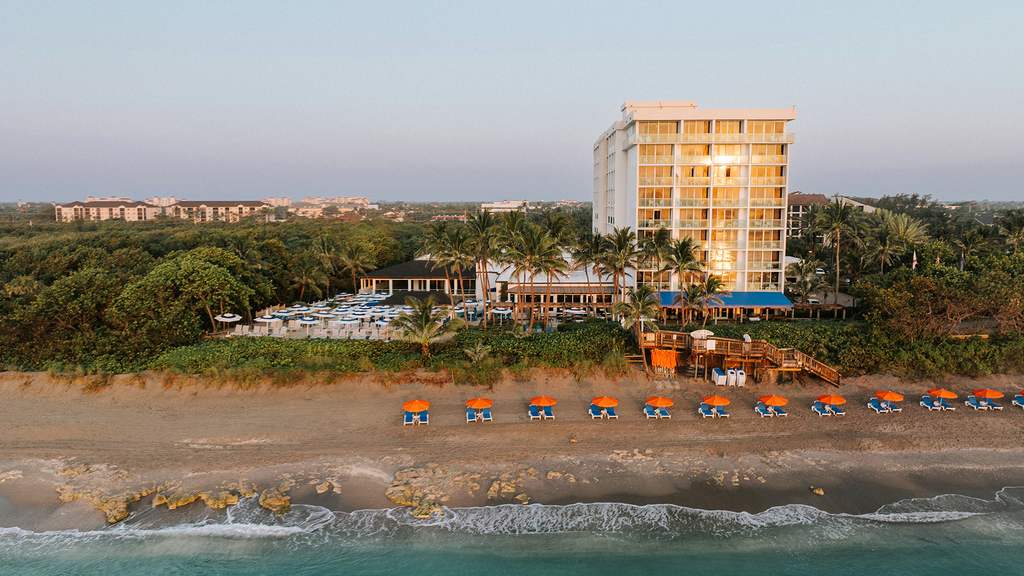
The best part about exploring Jupiter’s past? You don’t have to spend the entire day indoors reading museum plaques. Here, history comes with lighthouse views, waterfront walks, and the occasional opportunity to dip your toes in the Atlantic.
And when you’re ready to trade the past for the present, Jupiter Beach Resort & Spa offers a decidedly modern take on the Jupiter getaway. This recently renovated stylish oceanfront retreat pairs beautifully refreshed accommodations and contemporary coastal design with a private stretch of beach, oceanfront dining, and plenty of opportunities to soak up the best of Jupiter today.
So while Jupiter’s past certainly gives us plenty to talk about, its present is just as worthy of a visit.